Species Summary:
Adult lifespan: 6-12 months
Pupa period: 1-2 months.
Larva period: Male: 1.5 years Female: 1 year
Breeding difficulty: 3/10
Species Info:
Goliathus cacicusis one of the largest and most iconic beetle species in Africa. Renowned for its sheer size, bold coloration, and powerful build, this species is a favorite among collectors and insect enthusiasts alike.
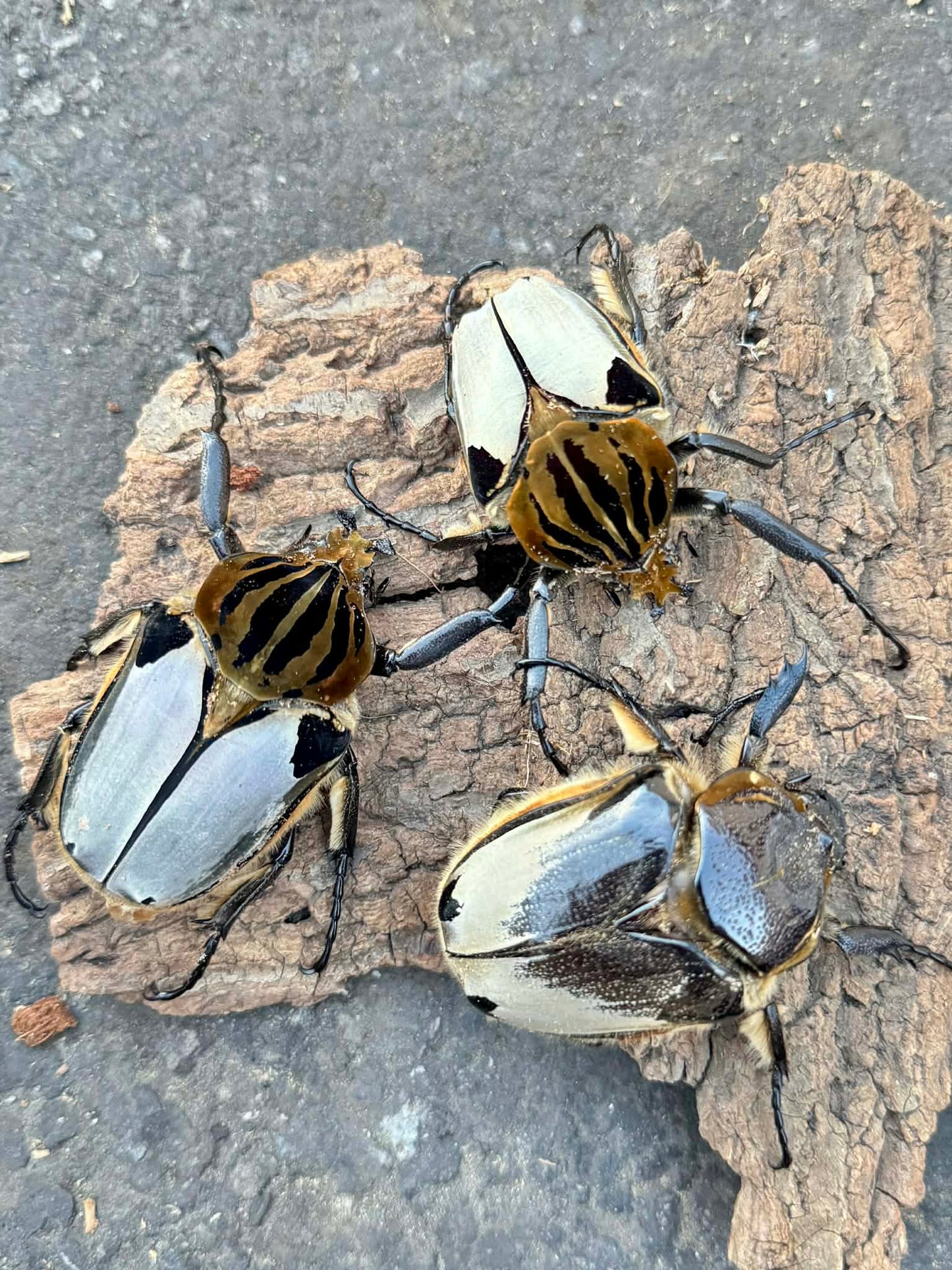
Silverback Goliath Beetle, Goliathus cacicus, is famous for its massive size, with adult males often reaching lengths of 80–110 millimeters, and occasionally even larger. They have a heavy, robust body with a velvety black or dark brown base color, contrasted by striking white patterns on the elytra (wing covers). Males are equipped with a prominent Y-shaped horn on the head, which they use in combat with other males during mating competitions.
These impressive beetles are native to West and Central Africa, with populations commonly found in countries such as Ghana, Ivory Coast, Nigeria, and Cameroon. They inhabit tropical rainforests and dense woodland environments, where they spend much of their time in the canopy, feeding and searching for mates.
The adult lifespan of Goliathus cacicus is relatively short, typically lasting around 6 to 10 months. During this period, they are active fliers and are often observed visiting tree sap flows or fruiting areas.
In the wild, Chief Goliath Beetles primarily feed on tree sap, rotting fruit, and other sugary substances. In captivity, they can be sustained with a diet of fruit (such as bananas, apples, and mangoes), along with sweet liquids like sugar water or beetle jelly. Proper nutrition is essential to maintain their energy levels and overall health.
Goliathus cacicus are generally calm but powerful, and while they can be handled, care should be taken due to their strength and sharp claws. Providing a habitat that mimics their natural environment—warm temperatures, high humidity, and vertical space for climbing—is crucial for their well-being.
Breeding Goliathus cacicus in captivity can be a rewarding challenge. Successful breeding requires deep, nutrient-rich substrate for larvae, as well as careful management of moisture and food sources throughout their development stages.
In summary, Goliathus cacicus is a magnificent and commanding species that stands out for its size, strength, and striking appearance. Whether admired in the wild or cared for in captivity, it offers a fascinating glimpse into the diversity and grandeur of beetle species in Africa.